


🎫 NOW OPEN: In-person JITSUVAX Training in Cardiff (Thu 26 Nov) ➔ 

ERI Background

Before JITSUVAX Training came the JITSUVAX Project. Keep reading to discover what the JITSUVAX Project is and how the Empathetic Refutational Interview (ERI) was created.

The JITSUVAX Project

The JITSUVAX Project was set up in response to the global spread of misinformation about vaccination. The international research consortium of psychologists, scientists, clinicians and experts was funded by the EU Horizon 2020.

Over five years (2020-2025), the JITSUVAX Project team:

  • gathered information from health workers and discovered many find it challenging to discuss and recommend vaccination with people who have concerns about vaccines
  • categorised anti-vaccination arguments and the underlying psychological motivations
  • developed and tested a vaccine conversation framework for health workers called the Empathetic Refutational Interview (ERI)
  • refined and tested ERI teaching workshops with health workers to create the training offered today


The JITSUVAX Project was led by the University of Bristol. Headed by Professor Stephan Lewandowsky, a world-leading expert in misinformation, the team included experts in vaccination, communication, clinicians, health psychologists, behavioural science researchers and more.

The JITSUVAX Project team

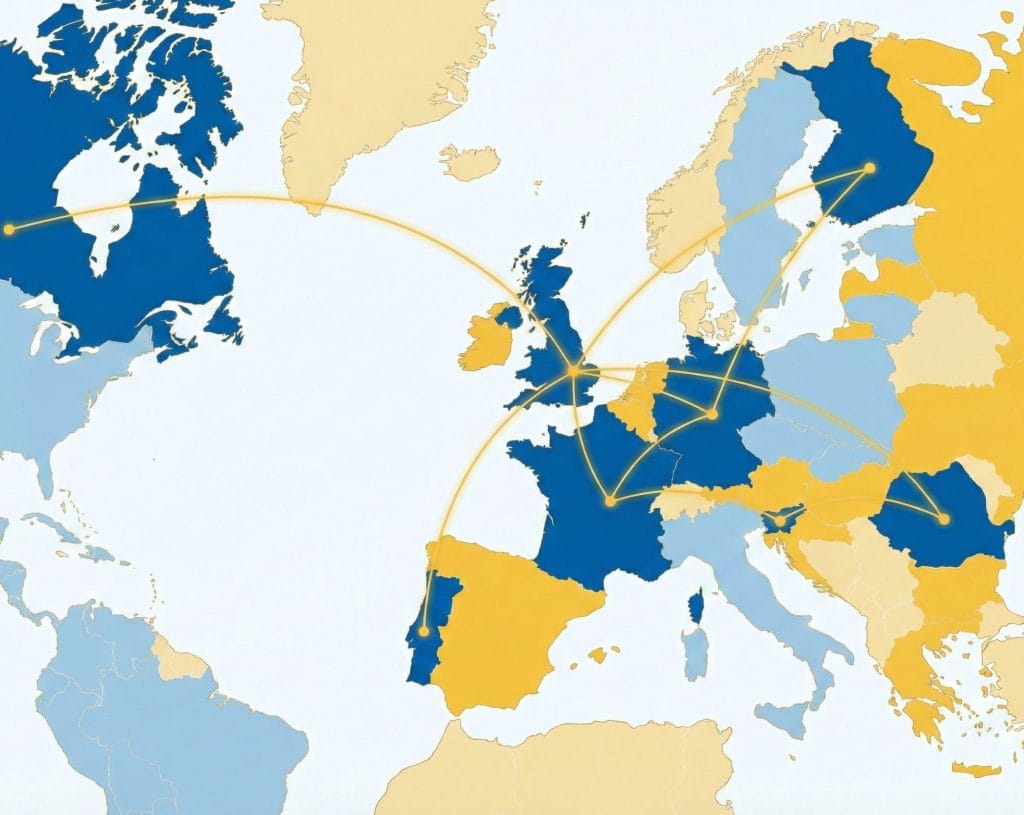
The core team included experts from the following institutions:

  • University of Bristol, UK
  • University of Erfurt, Germany
  • Observatoire Regional de la Sante, France
  • University of Coimbra, Portugal
  • University of Turku and Åbo Akademi University, Finland
  • University of Cambridge, UK


Supporting organisations included:

  • Université de Sherbrooke, Canada
  • Center for Health Policies and Services, Romania
  • Institute for Developmental and Strategic Analysis, Slovenia

Next Steps

If you are interested in our training or have any questions, please get in touch via the links below.

Group Bookings (we come to you):

Join an Open Workshop (you come to us): 

Other enquiry?

How the Empathetic Refutational Interview (ERI) was created

The Empathetic Refutational Interview (ERI) was created following years of research from the fields of:

  • psychology 
  • cognitive science of misinformation 
  • communication 
  • behavioural counselling  
  • vaccine hesitancy 

It blends core skills from Motivational Interviewing (MI), a well-established communication approach, with:

  • cognitive psychology best practice for correcting vaccine misconceptions
  • the psychological science of attitude roots – the deeper reasons for a person’s vaccine concerns

Specifically, expert Professor Arnaud Gagneur brought the techniques of MI for vaccine conversations to combine with Professor Stephan Lewandowsky’s approach to refuting vaccine misinformation into one teachable framework.

Research studies showed that each step of the four-step framework was important for having effective conversations about vaccination.

The ERI was shown to work in experimental studies during its development and in field studies in practice.

The launch of JITSUVAX Training

The purpose of the social enterprise is to train health workers in the ERI. The founders of JITSUVAX Training support ongoing research to improve vaccine conversations and developments in the ERI. We continue to collaborate with our international partners from the project, including Dr Pierre Verger in France whose team is also providing ongoing ERI training and evaluation.

Core principles of the ERI

1. An evidence-based approach

Combining the science of addressing vaccine misinformation effectively with evidence-based empathetic communication skills.

2. Supporting informed decision-making

The ERI empowers people to base their decisions on reliable information: on facts not fallacies.

3. Demonstrating empathy

Empathy and understanding are core to the approach. It’s about connecting with people and fostering trust.

4. Respecting people’s attitude roots

The ERI recognises the psychological factors underlying people’s vaccine concerns and works with these not against them.

Why it’s called Empathetic Refutational Interview

Empathetic

Demonstrating empathy is important to help create a safe and trusting environment for discussions about vaccinations. This core commitment is about coming alongside a person, connecting and understanding (not confronting).

Refutational

Concerns about vaccination are often based on misconceptions. Changing people’s beliefs can be challenging. The ERI uses approaches shown to be successful in correcting – or ‘refuting’ – misunderstandings.

Interview

This term emphasises the vital part of asking questions and actively listening to understand the root of a person’s attitudes. This naturally opens up a personalised dialogue, rather than delivering generic one-size-fits-all information.

Research and publications

The four-year research project produced multiple peer-reviewed scientific publications.

There are two key publications underpinning the ERI framework:

The Empathetic Refutational Interview to tackle vaccine misconceptions: four randomised experiments

Describes the four steps of the Empathetic Refutational Interview and the research findings that demonstrate the importance of each step.

Published March 2024

A taxonomy of anti-vaccination arguments: systematic literature review and text modelling

Describes the development and validation of a taxonomy for arguments expressed against vaccination, classified according to their underlying psychological attitude roots.

Published July 2023

For a full list of research publications and the detailed science click here

More about the research project

Find out more about the research project by visiting the JITSUVAX Project website.

What our trainees say

Interested in booking for your teams?

Express interest in attending a workshop

The cost will be £375 +VAT, including lunch, refreshments and access to ongoing support to help you develop the ERI skills.

Have a question?

Professor Stephan Lewandowsky

Non-Executive Director and Scientific Advisor

International misinformation expert

“My research looks at the persistence of misinformation and the spread of fake news and why people accept or reject scientific evidence, particularly around vaccinations.”

Stephan is an award-winning cognitive scientist at the University of Bristol and was the principal investigator on the JITSUVAX Research project. He helped form JITSUVAX Training. As a world-leading expert on misinformation, Stephan has advised European policymakers for many years. His 2020 report on Technology and Democracy shaped EU digital legislation. He has submitted reports and oral evidence for governments, courts, and policymakers in the UK, Canada, Australia, US, Ireland, Germany and Luxembourg. Stephan has published hundreds of scholarly papers, chapters and books and was recognised as a highly cited researcher in 2022, 2023 and 2024 – a distinction awarded to 0.1% of researchers worldwide. He has given 300+ academic talks, made numerous global media appearances and has been quoted in hundreds of articles. He is a fellow of the Academy of Social Sciences in the UK and a fellow of the German National Academy of Sciences (Leopoldina).